 EN
EN

The performance of an industrial fan directly shapes how air moves through large buildings, influencing temperature control, humidity management, and indoor air quality. When engineers design an industrial fan installation, they must consider the entire building envelope, ductwork layout, and occupancy patterns to achieve optimal airflow distribution. Understanding how an industrial fan functions within this complex system reveals why proper installation methodology becomes essential for operational success and long-term cost efficiency.
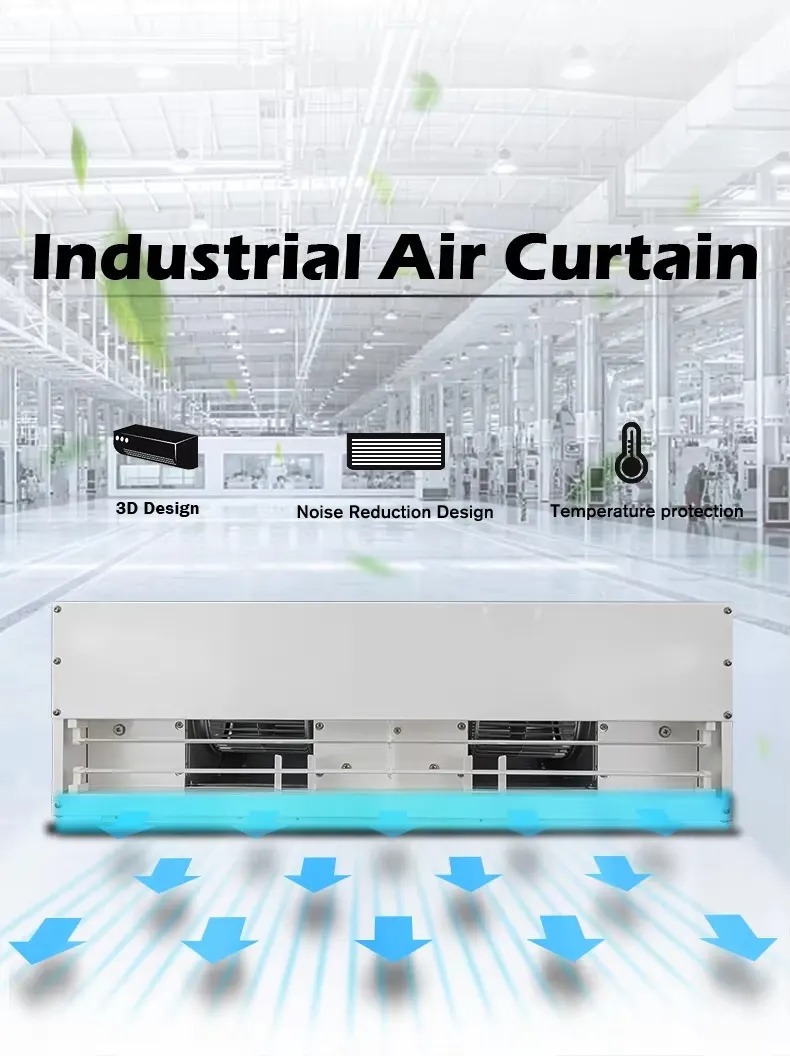
Large buildings require comprehensive ventilation strategies, and an industrial fan serves as a critical component in that infrastructure. The placement, size, and operational parameters of an industrial fan installation determine whether air reaches all occupied zones uniformly or creates dead spots and pressure imbalances. Facility managers and HVAC engineers must evaluate how each industrial fan contributes to the overall airflow pattern, ensuring that thermal comfort, air quality standards, and energy consumption align with building codes and operational budgets.
How Industrial Fan Placement Affects Building Airflow Patterns
Horizontal and Vertical Air Distribution Through Industrial Fan Positioning
The location where you install an industrial fan determines whether air flows efficiently across multiple floors or concentrates in isolated zones. When an industrial fan is positioned centrally within a ductwork network, it can push air outward to distant areas of the building; conversely, placing an industrial fan at the periphery may create localized circulation but leave core zones poorly ventilated. Large buildings benefit from multiple industrial fan installations strategically distributed through the ventilation network, creating balanced pressure zones that prevent hot and cold spots from developing.
Ductwork Configuration and Industrial Fan Performance
The design of ductwork surrounding an industrial fan installation significantly influences the velocity and distribution pattern of moving air. Ducts that narrow too quickly downstream from an industrial fan create pressure drops and noise, while ducts that expand gradually allow the air stream to maintain consistent velocity. An industrial fan installation that feeds into oversized ducts loses efficiency because air velocity decreases, reducing the fan's ability to overcome resistance and deliver air to distant locations. Engineers must balance ductwork diameter, length, and fittings to ensure that each industrial fan operates near its design efficiency point.
Industrial Fan Sizing and Capacity Requirements for Large Facilities
Calculating Air Volume Needs for Multi-Story Structures
Large buildings require industrial fan installations sized to handle total air changes per hour specified by building codes and process requirements. An undersized industrial fan fails to achieve adequate ventilation, leaving occupants exposed to poor air quality and thermal discomfort. Conversely, an oversized industrial fan wastes energy and creates excessive noise. The calculation begins with determining total building volume, occupancy density, and required air changes per hour, then selecting an industrial fan capacity that matches these demands while accounting for ductwork friction losses and system resistance.
Static Pressure and Fan Motor Selection
The motor powering an industrial fan installation must overcome all resistance in the ventilation pathway to deliver the rated airflow volume. Static pressure, measured in inches of water column, represents the resistance created by filters, dampers, ductwork, and terminal devices. An industrial fan motor that cannot generate sufficient static pressure will deliver less air than needed, while one oversized for the actual system resistance creates energy waste. Facility managers should commission baseline measurements of static pressure across the industrial fan installation to verify that the system performs as designed and identify opportunities for optimization.
Energy Efficiency and Operational Impact of Industrial Fan Installations
Variable Speed Drive Technology and Demand-Based Airflow Control
Modern industrial fan installations often incorporate variable frequency drives (VFDs) that adjust fan speed based on building demand, occupancy sensors, or environmental conditions. When an industrial fan runs continuously at full speed regardless of actual ventilation needs, energy consumption remains constant and high. However, an industrial fan equipped with VFD technology can ramp down during low-occupancy periods, reducing power draw and noise levels simultaneously. This technology makes industrial fan installation more cost-effective over the equipment lifecycle while maintaining comfort and air quality standards.
Maintenance Requirements and Long-Term System Performance
An industrial fan installation requires regular inspection and maintenance to preserve airflow performance and extend equipment service life. Dust accumulation on fan blades reduces aerodynamic efficiency, forcing the industrial fan motor to work harder and consume more energy. Bearing lubrication, blade alignment checks, and vibration monitoring are essential maintenance tasks for any industrial fan system. Facility teams that establish preventive maintenance schedules for their industrial fan installations typically achieve 15 to 20 percent better energy efficiency and significantly lower failure rates compared to reactive maintenance approaches.
FAQ
What factors determine whether an industrial fan installation will provide adequate airflow to all building zones?
An industrial fan installation's effectiveness depends on fan capacity, motor power, ductwork design, system resistance, and strategic placement within the ventilation network. Engineers calculate required airflow based on building volume and occupancy, then select an industrial fan sized to overcome all system friction losses. Proper commissioning and balancing of an industrial fan system ensures uniform air distribution across all zones.
Can an industrial fan installation reduce energy costs in large buildings?
Yes, an industrial fan installation paired with variable frequency drives and preventive maintenance can significantly reduce energy consumption. An industrial fan that operates at part speed during low-demand periods uses substantially less power than one running at constant full speed. Regular cleaning, bearing maintenance, and system optimization of your industrial fan installation help maintain peak efficiency and lower operating costs.
How often should an industrial fan installation be inspected and serviced?
An industrial fan installation should be inspected quarterly and serviced semi-annually for optimal performance. The frequency of service for your industrial fan installation may increase in dusty environments or facilities with high operating hours. Documentation of every industrial fan maintenance activity helps track performance trends and anticipate component replacement needs.