 EN
EN

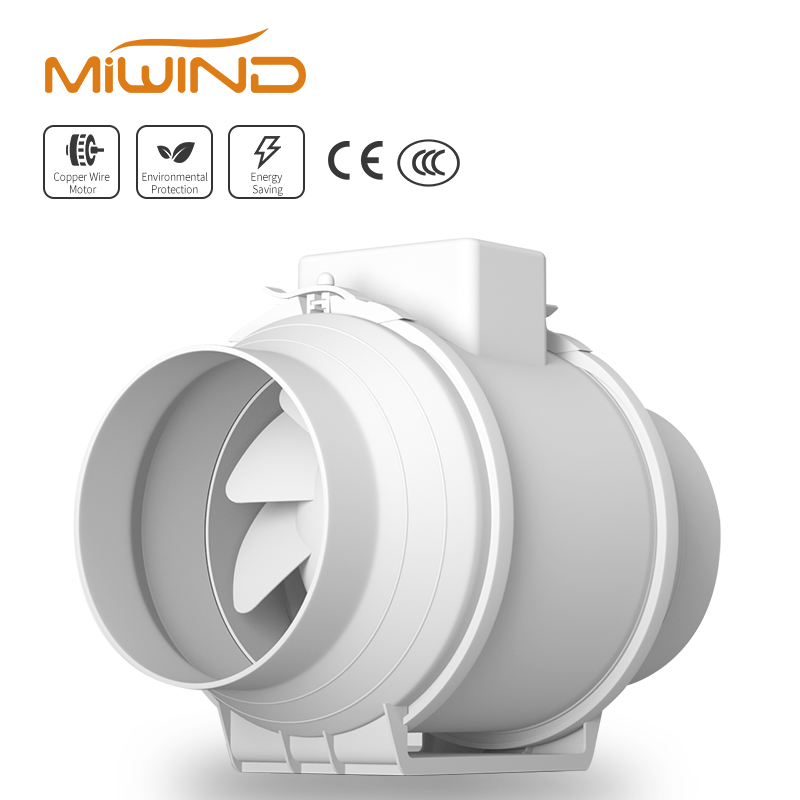
Long ventilation runs present unique challenges in HVAC design and installation. When ductwork extends over significant distances, air resistance increases substantially, requiring equipment that can maintain adequate airflow while minimizing energy consumption. An inline duct fan is specifically engineered to address these challenges by delivering consistent pressure and flow across extended duct networks. These fans are positioned directly within the duct pathway rather than mounted externally, creating a more efficient ventilation solution that maximizes performance in demanding installations.
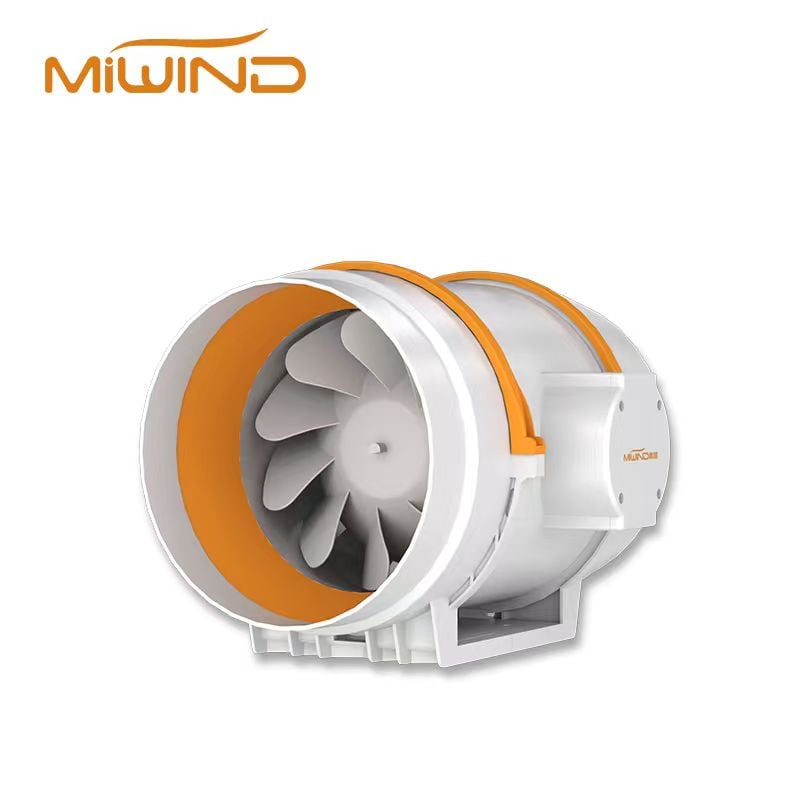
An inline duct fan represents a fundamental shift in how ventilation systems handle distance and resistance. Unlike traditional external fans that battle ductwork friction losses, an inline duct fan operates from within the duct itself, reducing installation complexity and improving overall system reliability. Industrial facilities, commercial buildings, and residential installations with complex duct layouts increasingly rely on inline duct fan technology to maintain code-compliant air quality and comfort standards without excessive energy overhead.
Pressure Recovery and Resistance Management
How Inline Duct Fans Combat Friction Losses
Long ductwork creates significant air resistance due to friction between moving air and duct surfaces. The longer the run, the greater the pressure drop, which forces traditional external fans to work harder and consume more energy. An inline duct fan placed strategically within the duct eliminates this cumulative resistance problem by generating thrust directly at the point where airflow has already begun to slow. This strategic positioning allows the inline duct fan to recover lost pressure and restore adequate velocity across remaining duct sections without the energy penalty of oversizing an external unit.
When an inline duct fan operates within the duct, it benefits from already-moving air, which reduces motor strain and energy consumption compared to external mounting. The inline duct fan design captures ambient duct pressure and converts it into additional thrust, creating a more efficient pressure recovery mechanism. This principle becomes increasingly valuable as ventilation runs extend beyond 50 feet, where friction losses commonly exceed 10 percent of total system pressure capacity.
Installation Flexibility in Demanding Layouts
Complex building layouts often require ductwork routing through walls, attics, crawl spaces, and across multiple rooms. An inline duct fan integrates seamlessly into these challenging environments because it requires no external mounting surface or dedicated equipment room. The inline duct fan simply connects between existing duct sections, making retrofitting older buildings or expanding existing ventilation networks far more practical. This flexibility eliminates the need for costly structural modifications or relocation of mechanical equipment rooms.
The modular nature of inline duct fan installation also supports system expansion and reconfiguration. If future building modifications require extending ventilation to new areas, an additional inline duct fan can be inserted into the new duct run without disrupting the original installation. This scalability makes the inline duct fan an intelligent investment for facilities anticipating growth or changing ventilation demands.
Energy Efficiency and Operating Cost Reduction
Optimized Motor Performance Under Load
Inline duct fan systems operate with significantly lower motor loads compared to traditional external fans handling equivalent ductwork lengths. Because the inline duct fan generates pressure incrementally as air moves through the duct rather than forcing all air through external fan blades at once, motor amperage remains lower and operating temperatures stay within comfortable ranges. This reduced strain translates directly into lower electricity consumption, which accumulates to substantial savings over the equipment's operational lifetime.
An inline duct fan typically achieves 20 to 40 percent energy savings compared to oversized external units on long-run applications. The inline duct fan distributes work efficiently, preventing the motor from cycling between idle and peak load conditions. Consistent, moderate load operation maintains optimal motor efficiency and extends bearing life, reducing maintenance costs and unplanned downtime.
Noise Reduction and System Integration
External fans mounted at air handling units or rooftops generate considerable noise that travels through ductwork into occupied spaces. An inline duct fan mitigates this problem by distributing sound generation throughout the duct network rather than concentrating it at a single source. Vibration isolation mounts and duct-integrated construction of inline duct fan units further suppress noise transmission compared to rigid external mounting systems. The inline duct fan operates with 5 to 15 decibels less noise than equivalent external units, creating quieter indoor environments for occupants.
When building occupants notice quieter HVAC operation, they experience greater comfort and perceive the facility as better maintained. For commercial offices, healthcare facilities, and educational institutions, the noise reduction from an inline duct fan system contributes measurably to overall environmental quality and user satisfaction ratings.
Sizing Strategies and Long-Run Application Design
Matching Inline Duct Fan Capacity to Real Conditions
Proper sizing of an inline duct fan depends on understanding actual friction losses across the complete duct network. Designers calculate total static pressure requirements by accounting for ductwork length, diameter, material, bends, and terminal device resistance. Once total pressure demand is established, the inline duct fan must be selected to deliver required airflow at the calculated static pressure. Oversizing an inline duct fan wastes energy and generates excessive noise, while undersizing compromises ventilation effectiveness. The inline duct fan selection process demands precision and detailed system analysis.
Long ventilation runs extending 100 feet or more typically require inline duct fan units with higher CFM ratings and motor horsepower compared to shorter applications. Positioning the inline duct fan roughly midway through the ductwork often optimizes performance and minimizes total system pressure requirements. This strategic placement allows the inline duct fan to serve as a 'booster' that refreshes air pressure and velocity before it reaches the final duct section and terminal outlets.
Code Compliance and Regulatory Requirements
Building codes and ventilation standards establish minimum air exchange rates and maximum allowable pressure drops for different facility types. An inline duct fan provides a code-compliant solution for achieving these mandates in buildings where traditional external fans would create excessive pressure drops or energy consumption. The inline duct fan approach allows designers to meet ventilation codes while maintaining reasonable operating costs and acceptable noise levels throughout the facility.
ASHRAE standards recognize inline duct fan systems as a legitimate approach to long-run ventilation challenges when properly sized and installed. Many jurisdictions now explicitly allow inline duct fan solutions in building code interpretations, encouraging designers to consider them alongside traditional approaches. The inline duct fan has become a standard tool for ventilation engineers addressing demanding facility requirements.
FAQ
What distance qualifies as a long ventilation run requiring an inline duct fan?
Most ventilation experts recommend evaluating inline duct fan solutions for runs exceeding 50 to 75 feet, particularly when ductwork includes multiple bends or transitions to smaller diameters. At these distances, friction losses typically reach 5 to 10 percent of total available system pressure, creating noticeable reductions in airflow at remote terminals. An inline duct fan becomes increasingly valuable as runs extend beyond 100 feet or when ductwork must navigate complex building layouts. Consulting duct friction charts and performing pressure drop calculations helps determine if a specific installation will benefit from an inline duct fan approach.
Can an inline duct fan be added to an existing ventilation system?
Yes, an inline duct fan can be retrofitted into most existing ductwork installations with minimal disruption. The inline duct fan simply cuts into the existing duct at an optimal location and connects using standard ductwork fittings. No external mounting brackets, equipment room modifications, or structural changes are required. The inline duct fan approach makes system upgrades fast and affordable compared to replacing entire external fan units or redesigning mechanical rooms. However, careful measurements and calculations ensure the selected inline duct fan size matches the existing ductwork dimensions and system requirements.
How does an inline duct fan compare to upgrading to a larger external fan?
Upgrading to a larger external fan would increase motor size, power consumption, and noise output to overcome ductwork friction losses. An inline duct fan solves the same problem more efficiently by distributing the pressure generation throughout the duct network. The inline duct fan approach typically consumes 20 to 40 percent less energy than oversizing an external unit. Additionally, an inline duct fan produces less noise and maintains lower operating temperatures, improving system reliability and extending equipment life compared to continuously operating a larger external fan at peak capacity.