 EN


Ventilating fans play a critical role in maintaining healthy air quality within enclosed spaces by actively moving stagnant air and promoting continuous circulation. Whether in industrial facilities, commercial buildings, or residential environments, ventilating fans address one of the most persistent challenges in indoor air management: the accumulation of stale air, moisture, and airborne contaminants. Understanding how ventilating fans improve air circulation is essential for anyone responsible for facility maintenance, workplace safety, or environmental comfort. Poor air circulation can lead to employee discomfort, reduced productivity, equipment corrosion, and health concerns, making ventilating fans an investment in both operational efficiency and occupant well-being.
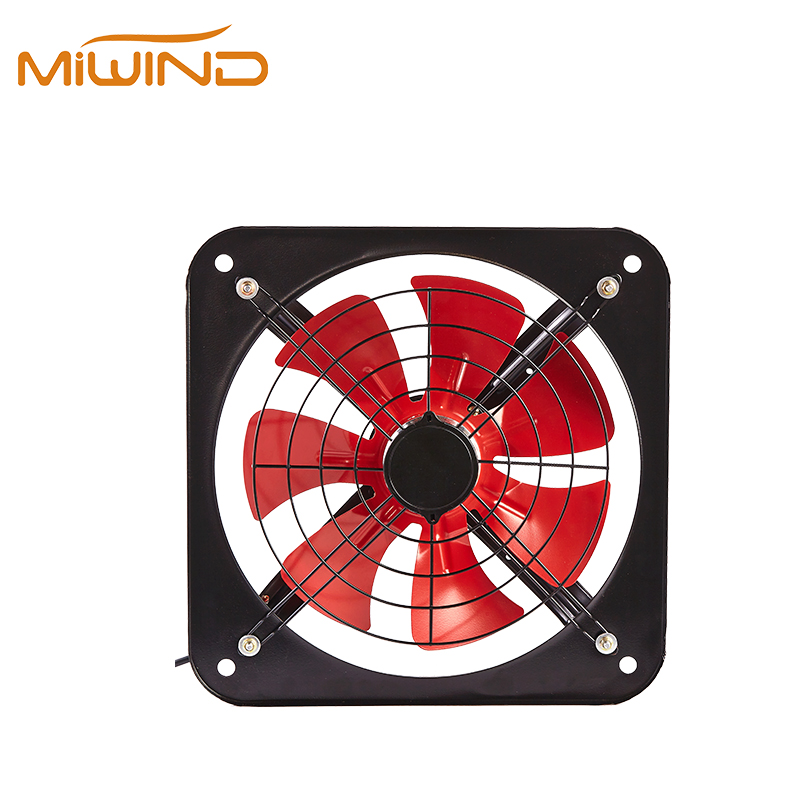
The fundamental principle behind how ventilating fans improve air circulation involves the mechanical movement of air masses through strategic placement and continuous operation. Unlike passive ventilation methods that rely on natural temperature differences or wind pressure, ventilating fans actively pull or push air through ductwork and enclosed environments, ensuring consistent air exchange rates. This active approach guarantees reliable air movement even when external conditions are unfavorable, making ventilating fans indispensable in spaces where natural ventilation alone cannot meet air quality standards.
The Mechanism of Air Movement and Circulation
How Ventilating Fans Generate Air Flow
Ventilating fans operate by using rotational motor-driven impellers or blades that displace air molecules and create pressure differentials across the fan housing. As the blades rotate, they compress air on one side while creating a vacuum on the other, forcing air to move in a specific direction through connected ductwork. This mechanical displacement is the foundation of how ventilating fans improve air circulation by overcoming static pressure and resistance within enclosed systems. The fan's cubic feet per minute (CFM) rating determines the volume of air it can move, while the motor power ensures sustained operation under varying load conditions.
Ductwork Integration and Air Pathway Design
Ventilating fans must be paired with properly designed ductwork to maximize their effectiveness in improving air circulation throughout enclosed spaces. The ducts serve as pathways that direct airflow from intake points to exhaust outlets, ensuring comprehensive coverage of the entire environment. When ventilating fans are correctly sized and integrated into a well-planned duct network, they eliminate dead zones where stagnant air accumulates. Poor ductwork design, undersized ducting, or excessive bends and restrictions can significantly reduce how well ventilating fans improve air circulation, creating bottlenecks that diminish overall system performance.
Key Benefits of Ventilating Fans in Enclosed Environments
Moisture and Humidity Control
One of the most important ways ventilating fans improve air circulation is by continuously removing excess moisture and humidity from enclosed spaces. In environments with high moisture generation such as bathrooms, kitchens, manufacturing facilities, or storage areas, stagnant air cannot naturally carry away water vapor, leading to condensation and mold growth. Ventilating fans extract humid air and replace it with drier air from outside or other building zones, maintaining optimal humidity levels. This moisture removal directly prevents structural damage, equipment corrosion, and health hazards associated with mold and mildew proliferation.
Removal of Airborne Contaminants and Odors
Ventilating fans improve air circulation by actively extracting odors, dust, chemical fumes, and biological contaminants that would otherwise linger in stagnant air. Industrial spaces, laboratories, kitchens, and manufacturing plants generate continuous sources of airborne particles and volatile organic compounds that degrade indoor air quality. When ventilating fans operate continuously or on demand, they pull contaminated air out of the breathing zone and exhaust it outside the building. This active removal mechanism prevents the accumulation of harmful substances far more effectively than passive ventilation or simple air mixing.
Temperature Regulation and Thermal Comfort
Ventilating fans improve air circulation by promoting even temperature distribution throughout enclosed spaces, preventing the formation of hot spots or cold zones. In large industrial facilities or multistory buildings, temperature stratification can occur where hot air rises and concentrates near ceilings while occupied zones remain cooler. Ceiling-mounted or strategically positioned ventilating fans create air mixing that distributes heated or cooled air more uniformly. This improved circulation reduces the burden on HVAC systems, lowers energy consumption, and enhances thermal comfort for occupants, making ventilating fans a cost-effective complement to primary climate control systems.
Applications Where Ventilating Fans Significantly Improve Air Circulation
Industrial and Manufacturing Facilities
In industrial settings, ventilating fans improve air circulation by removing heat, fumes, and dust generated by machinery and manufacturing processes. Large warehouse spaces, chemical processing plants, and food production facilities depend on continuous air movement to maintain safe working conditions. Ventilating fans extract hot air from equipment zones, preventing equipment overheat and worker exposure to dangerous temperatures and fumes. The improved air circulation also supports proper functioning of air filtration systems by ensuring consistent airflow through filter banks.
Commercial and Office Buildings
Ventilating fans improve air circulation in commercial buildings by distributing outdoor or conditioned air throughout large open spaces and corridors. Conference rooms, data centers, and office floors benefit from continuous air movement that maintains indoor air quality and prevents stagnation. When ventilating fans operate in conjunction with building automation systems, they can adjust airflow based on occupancy and air quality sensors, optimizing both comfort and energy efficiency. This adaptive approach ensures that ventilating fans improve air circulation precisely when and where it is most needed.
Specialized Environments and Storage Areas
Ventilating fans are essential in specialized enclosed spaces such as server rooms, storage facilities, and technical laboratories where maintaining consistent environmental conditions is critical. Sensitive equipment and stored materials require protection from humidity, temperature fluctuations, and contaminant accumulation. Ventilating fans improve air circulation in these spaces by creating controlled, predictable airflow patterns that maintain equipment longevity and material integrity. Without proper air circulation from ventilating fans, even climate-controlled rooms can develop microclimates that damage valuable assets.
FAQ
What is the ideal CFM rating for ventilating fans in a specific enclosed space?
The appropriate CFM rating for ventilating fans depends on room size, occupancy density, air quality requirements, and contamination sources. A general guideline is to achieve at least 4 to 6 air changes per hour in normal office environments, while manufacturing spaces may require 8 to 12 air changes hourly. Calculating the total room volume and multiplying by the desired air change rate yields the required CFM. Consulting with ventilation engineers or referencing building codes specific to your industry ensures ventilating fans are properly sized to improve air circulation effectively.
How often should ventilating fans operate to maintain adequate air circulation?
Ventilating fans should operate continuously in spaces where contaminant generation is constant, such as manufacturing plants or laboratories. In commercial offices and residential settings, ventilating fans can operate on schedules aligned with occupancy or be triggered by humidity or air quality sensors. Many modern ventilating fans improve air circulation through demand-controlled ventilation, running at reduced capacity during off-peak hours and increasing airflow when sensors detect declining air quality. This approach balances energy efficiency with air quality maintenance.
Can ventilating fans alone replace traditional HVAC systems?
Ventilating fans improve air circulation and remove stale air but cannot independently provide heating or cooling functions. Traditional HVAC systems condition air to specific temperatures, while ventilating fans focus on movement and freshness. In many facilities, ventilating fans work synergistically with HVAC systems, improving distribution of conditioned air and reducing the load on primary heating and cooling equipment. This complementary relationship makes ventilating fans a valuable enhancement rather than a replacement for comprehensive climate control systems.