 EN
EN

An industrial fan operates at the intersection of mechanical precision and thermal performance. In heavy duty applications, the efficiency of an industrial fan directly impacts operational costs, energy consumption, and system reliability. Understanding what drives industrial fan efficiency is essential for engineers, facility managers, and procurement specialists who need to select, operate, or maintain equipment that performs reliably under demanding conditions.
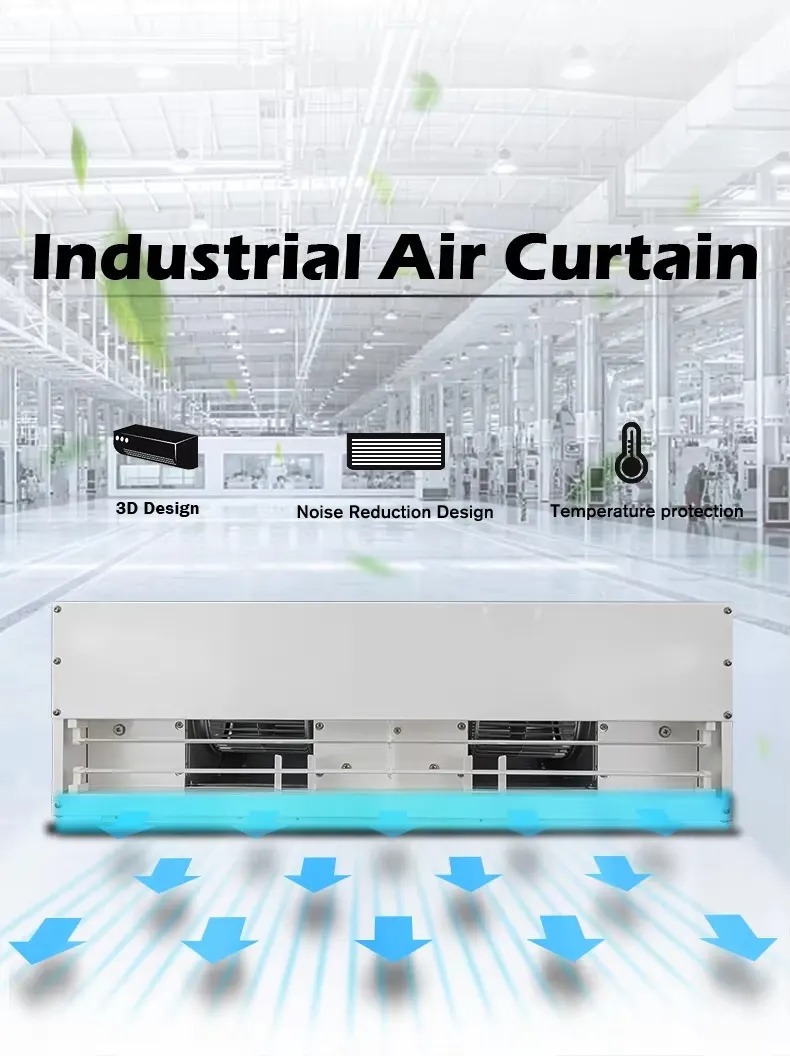
Heavy duty industrial fan applications span power generation, mining, chemical processing, steel manufacturing, and large-scale HVAC systems. Each environment presents unique thermal, pressure, and flow challenges. An industrial fan must balance airflow delivery, static pressure resistance, noise levels, and durability while consuming minimal electrical power. This balance defines efficiency and determines whether an industrial fan meets operational requirements or becomes a source of escalating costs and unplanned downtime.
Design and Aerodynamic Factors Influencing Industrial Fan Performance
Blade Configuration and Impeller Design
The blade shape, angle, and material of an industrial fan directly influence how effectively it converts mechanical energy into airflow. Modern industrial fan designs employ computational fluid dynamics to optimize blade curvature and reduce turbulence. Backward-curved blades, commonly found in centrifugal industrial fan systems, provide higher efficiency compared to forward-curved designs by reducing flow separation and minimizing energy loss at the blade tips. An industrial fan with properly engineered blades can achieve efficiency ratings 10 to 15 percent higher than poorly optimized alternatives.
The relationship between blade speed and airflow determines whether an industrial fan operates in its optimal efficiency zone. When an industrial fan is sized correctly for its application, it runs near its design point, delivering rated airflow at rated pressure with minimal energy waste. Oversized industrial fan installations force the unit to operate at part load, where aerodynamic losses increase significantly. Undersized industrial fan selections cause the motor to work harder, generating excess heat and shortening equipment life.
Motor Integration and Drive System Efficiency
An industrial fan's overall efficiency depends not only on blade aerodynamics but also on motor performance and drive system design. Direct-drive industrial fan systems eliminate belt losses, which can account for 3 to 5 percent energy waste in belt-driven configurations. Variable frequency drives paired with an industrial fan allow real-time speed adjustment, enabling the system to match actual demand and avoid running at full capacity when partial airflow suffices. This dynamic control transforms an industrial fan from a fixed-load component into an adaptive system that responds to changing process conditions.
Premium-efficiency motors rated for industrial fan duty reduce electrical losses and operate cooler, extending service intervals. When specifying an industrial fan for heavy duty work, matching motor class, thermal protection, and voltage rating to the application prevents overheating and unexpected failures. Advanced industrial fan installations include soft starters or frequency converters that reduce electrical stress during startup and allow progressive speed ramp-up, protecting both the fan mechanical components and the power distribution infrastructure.
Operational and Environmental Determinants of Industrial Fan Efficiency
System Pressure and Resistance Conditions
The external system resistance against which an industrial fan must push determines how hard the motor works. Dirty filters, blocked air passages, or fouled heat exchanger surfaces increase static pressure, forcing the industrial fan to consume more power while delivering less airflow. Regular maintenance of downstream components directly preserves industrial fan efficiency and prevents energy creep. In applications like dust collection or combustion air supply, even small accumulations of particulate matter can degrade industrial fan performance by 5 to 10 percent within weeks of operation.
Ductwork design and installation quality profoundly affect how an industrial fan performs. Poorly designed ducts with sharp bends, sudden area changes, or internal blockages create turbulence that an industrial fan must overcome by increasing speed and power draw. Well-engineered ducting that matches the industrial fan outlet diameter and incorporates gradual transitions keeps the system resistance low and maintains the industrial fan in its efficient operating range. Flow straighteners and turning vanes, when properly installed, guide air smoothly and reduce the pressure penalty that undermines industrial fan performance.
Environmental Factors and Ambient Conditions
Ambient temperature influences industrial fan efficiency through air density and motor cooling. Hot climates increase air viscosity, which requires an industrial fan to do more work to move the same mass of air. Conversely, high-altitude installations encounter thinner air; an industrial fan must spin faster or use a larger impeller to deliver the same volumetric airflow, increasing power consumption. Environmental contamination—dust, moisture, corrosive fumes—deposits on blade surfaces and reduces aerodynamic precision, causing efficiency decay over time. Stainless steel or treated blade surfaces help an industrial fan resist fouling and maintain performance in harsh chemical environments.
Moisture content in inlet air affects industrial fan stability and efficiency. Humid air can cause condensation inside the casing, leading to corrosion and imbalance. In spray-cooled applications or coastal environments, an industrial fan designed with drainage provisions and corrosion-resistant materials preserves efficiency longer and reduces maintenance costs. Temperature-stable installations allow an industrial fan to operate consistently; thermal cycling accelerates material fatigue and vibration growth, which accelerates efficiency loss and increases failure risk.
Measurement, Selection, and Optimization of Industrial Fan Systems
Performance Metrics and Efficiency Rating Standards
Industrial fan efficiency is quantified through standardized metrics including static efficiency, total efficiency, and power consumption per unit airflow. Static efficiency measures how effectively an industrial fan delivers pressure rise; total efficiency includes both pressure and velocity recovery. Rating bodies such as the American Society of Mechanical Engineers establish test procedures that allow fair comparison between industrial fan products across manufacturers. When selecting an industrial fan, engineers should review certified performance curves that show efficiency across a range of airflow and pressure points, not just the advertised nameplate rating.
Sound power level is a secondary efficiency consideration; an industrial fan that operates quietly typically employs better aerodynamic design and reduced turbulence, traits that often correlate with higher energy efficiency. Modern industrial fan standards emphasize both electrical efficiency and acoustic performance, recognizing that noise generation represents wasted energy. An industrial fan specified for heavy duty service should meet efficiency minimums defined by regional energy codes while keeping sound output within acceptable limits for worker safety and process compatibility.
Right-Sizing and Selection Best Practices
Proper industrial fan selection begins with accurate system characterization. Over-sizing an industrial fan is the most common efficiency mistake; facility designers often add margin to account for uncertainty, resulting in an industrial fan that operates far below design point where efficiency plummets. Load analysis, including seasonal variation and future process expansion, ensures the selected industrial fan can meet both current and foreseeable demand without unnecessary over-capacity. Modular industrial fan systems with multiple smaller units sometimes outperform single large units by allowing partial units to idle during low-load periods.
Commissioning and baseline performance testing establish the efficiency reference for an industrial fan installation. Measuring actual airflow, pressure drop, motor current, and vibration during startup provides data to detect degradation trends. Predictive maintenance programs that track industrial fan power draw and efficiency metrics allow early intervention before failures occur. When an industrial fan's efficiency declines beyond acceptable thresholds, timely repair or replacement prevents cascading problems and controls total lifecycle cost.
FAQ
What is the typical efficiency range for an industrial fan in heavy duty service?
Modern industrial fan designs achieve static efficiency ratings between 70 and 90 percent under optimal operating conditions. Centrifugal industrial fan units tend to deliver higher efficiency than axial types, though both can meet heavy duty requirements when properly selected. Actual field efficiency often runs 10 to 20 percent lower than rated values due to undersizing, fouling, system resistance, and part-load operation. Premium industrial fan installations with variable speed drives and optimized ducting maintain efficiency closer to nameplate ratings throughout their service life.
How does temperature affect industrial fan efficiency in high-heat environments?
Higher ambient temperatures reduce air density, forcing an industrial fan to move more volume or spin faster to deliver the same mass airflow, which increases power consumption. In applications exceeding 50°C, motor cooling becomes critical; many industrial fan designs include external coolers to prevent thermal shutdown. Temperature-rated motors, blade materials rated for sustained high-temperature exposure, and thermal-management ducting help an industrial fan maintain performance in extreme conditions. Heat-resistant coatings on blades reduce fouling and aerodynamic degradation, preserving efficiency over extended operating cycles.
Can variable frequency drives improve industrial fan efficiency?
Yes; variable frequency drives are among the most effective efficiency improvements for industrial fan systems. Because fan power consumption rises with the cube of speed, reducing motor speed by even 10 percent can cut power draw by nearly 30 percent. Variable frequency drive-equipped industrial fan systems adapt to fluctuating demand, eliminating the waste associated with running full-speed when partial load suffices. Over a five-year period, variable frequency drive installation typically recovers its capital cost through energy savings while extending industrial fan equipment life.