 EN


Large scale air movement remains one of the most critical operational challenges in modern manufacturing, warehousing, and processing facilities. An industrial fan system serves as the backbone of climate control, contamination management, and worker safety across diverse industrial environments. Understanding how these sophisticated systems function reveals why they represent such essential infrastructure investments for enterprises managing complex thermal dynamics, dust management, and environmental compliance. The performance and reliability of an industrial fan directly impact energy costs, equipment longevity, and regulatory adherence in operations ranging from food processing plants to semiconductor manufacturing facilities.
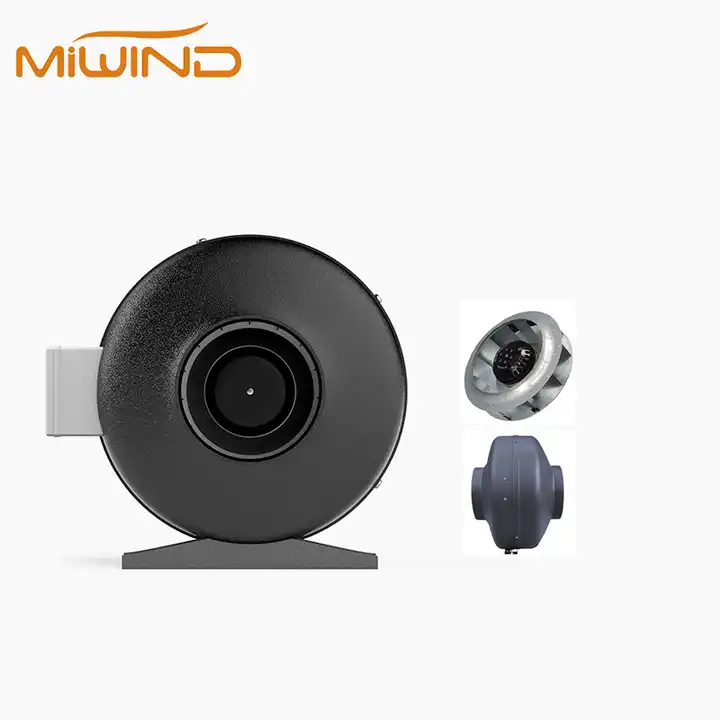
An industrial fan system encompasses far more than a simple motor with blades. These integrated solutions combine aerodynamic engineering, materials science, variable speed control, and sophisticated ducting networks to move air efficiently across large spaces. Modern industrial fan technology addresses specific operational requirements such as temperature regulation, moisture extraction, pollutant removal, and pressure balancing. The effectiveness of an industrial fan system depends on proper sizing, installation methodology, maintenance protocols, and integration with building infrastructure. Businesses that invest in understanding these technical dimensions achieve superior operational outcomes and avoid costly failures.
Core Technologies Behind Industrial Fan Performance
Aerodynamic Design and Motor Integration
The foundational strength of any industrial fan lies in its aerodynamic design principles combined with powerful motor systems. Modern industrial fan engineering emphasizes efficiency by optimizing blade geometry, housing design, and airflow pathways to maximize cubic feet per minute (CFM) output relative to energy consumption. Premium industrial fan models incorporate variable frequency drives that allow operators to adjust motor speed based on real time operational demands, significantly reducing electricity costs compared to fixed speed alternatives. The motor selection for an industrial fan system must account for continuous duty cycles, environmental contamination levels, and temperature extremes encountered in specific applications. Centrifugal and axial fan configurations represent the two dominant industrial fan categories, each suited to different pressure requirements and spatial constraints.
Material Selection and Durability
Industrial fan systems operating in harsh environments demand material specifications that resist corrosion, abrasion, and chemical exposure. Steel, aluminum, and specialized composite materials serve different industrial fan applications depending on whether the system handles corrosive gases, abrasive particles, or extreme temperature conditions. An industrial fan designed for chemical processing facilities requires different material treatment than one serving a clean room semiconductor environment. Bearing selection, seal integrity, and blade coating technologies significantly extend industrial fan lifespan while maintaining performance consistency. Investment in corrosion resistant industrial fan construction prevents premature replacement and maintains consistent airflow characteristics essential for process stability.
Applications Driving Industrial Fan Demand
Manufacturing and Processing Operations
Industrial fan systems prove indispensable in manufacturing environments where heat dissipation and contamination control directly impact product quality and worker safety. Metalworking facilities employ industrial fan systems to evacuate hazardous fumes, cool equipment, and maintain safe respiratory air quality for personnel. Textile mills, paper manufacturing plants, and chemical processing facilities all depend on specialized industrial fan configurations tailored to their specific operational challenges. An industrial fan system in food processing must balance rapid temperature reduction with hygiene requirements and product contamination prevention. Pharmaceutical manufacturing facilities require industrial fan technology meeting strict cleanroom standards while maintaining precise environmental parameters that protect product integrity.
HVAC and Climate Control Applications
Comprehensive climate management in large commercial and industrial buildings relies on sophisticated industrial fan systems integrated with ducting networks and control electronics. An industrial fan designed for central HVAC applications must maintain consistent performance across varying outdoor temperature conditions while responding to occupancy patterns and thermal loads. Data centers employ specialized industrial fan technology to manage heat rejection from thousands of servers operating continuously. Hospitals, research laboratories, and specialized facilities demand industrial fan systems providing precise air quality control, pressure differential management, and contamination filtration. The reliability of these industrial fan configurations directly impacts operational continuity and regulatory compliance across critical facilities.
Selection Criteria and Performance Optimization
Sizing and Capacity Planning
Proper industrial fan selection begins with accurate calculation of total airflow requirements, pressure drop across the system, and environmental conditions throughout operational cycles. Engineers determining industrial fan specifications must account for ductwork configuration, filter loading, and potential future capacity expansion when the facility grows. An oversized industrial fan wastes energy and creates unnecessary noise, while undersized configurations fail to achieve climate control objectives and stress equipment prematurely. Performance curves provided by industrial fan manufacturers detail how different models respond to pressure variations and help engineers predict real world behavior under specific installation conditions. Temperature, altitude, air density, and humidity all influence how an industrial fan system performs relative to manufacturer ratings conducted under standard test conditions.
Energy Efficiency and Operational Economics
Operating costs over an industrial fan system's lifecycle typically exceed the initial capital investment by a substantial margin, making energy efficiency a critical economic factor. Modern variable speed industrial fan technology can reduce annual energy consumption by 30 to 50 percent compared to fixed speed designs operating continuously. An industrial fan equipped with advanced motor controls responds to actual system demands rather than running at constant full capacity regardless of current requirements. Maintenance accessibility, bearing lubrication systems, and seal durability directly impact total cost of ownership for industrial fan installations spanning ten to twenty year operational periods. Strategic industrial fan investment in premium efficiency models often delivers payback within three to five years through reduced electricity consumption and extended maintenance intervals.
FAQ
How does an industrial fan system differ from standard HVAC fans?
An industrial fan operates at higher pressures, moves larger air volumes, and incorporates heavy duty construction suitable for continuous operation in harsh environments. Industrial fan systems handle contaminated air streams, extreme temperatures, and demanding installation conditions that standard HVAC fans cannot tolerate. The industrial fan undergoes rigorous testing for durability and maintains consistent performance across extended operational cycles. HVAC fans typically operate in controlled building environments with moderate loads, while industrial fan applications demand resilience against abrasive particles, chemical exposure, and thermal extremes.
What maintenance does an industrial fan system require?
Regular industrial fan maintenance includes bearing lubrication according to manufacturer specifications, vibration monitoring, and periodic inspection of seals and blade condition. Dust and debris accumulation on industrial fan blades reduces efficiency and should be cleaned on a schedule matching operating environment contamination levels. An industrial fan system benefits from preventive maintenance programs that identify bearing wear, seal degradation, and motor bearing issues before they cause failures. Scheduled industrial fan maintenance typically occurs annually or semi-annually depending on duty cycle severity and environmental conditions.
Can an existing industrial fan system be upgraded for better efficiency?
Many industrial fan installations support upgrades such as variable frequency drives, improved motor designs, and aerodynamic blade enhancements that increase efficiency without complete system replacement. Installing an industrial fan controller capable of variable speed operation often provides immediate energy savings for existing systems oversized for current requirements. Retrofitting an industrial fan system with higher efficiency motor technology offers moderate improvements when core components remain functional. Substantial efficiency gains typically require replacing the entire industrial fan system with modern designs incorporating optimized aerodynamics and advanced motor technologies.