 EN
EN

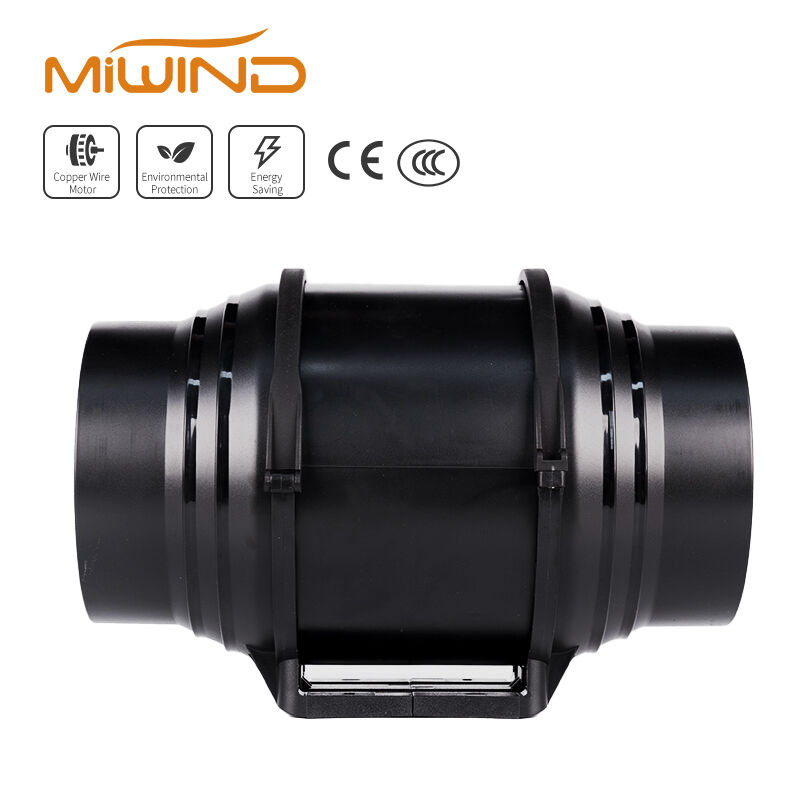
In any ventilation system, moving air efficiently from one point to another is the foundation of good indoor air quality, thermal comfort, and energy performance. A duct fan is one of the most practical and widely used components for achieving this goal. Whether installed in residential buildings, commercial spaces, or industrial facilities, a duct fan works inline within the ductwork to actively push or pull air through the system, compensating for pressure losses and ensuring consistent airflow across every zone.
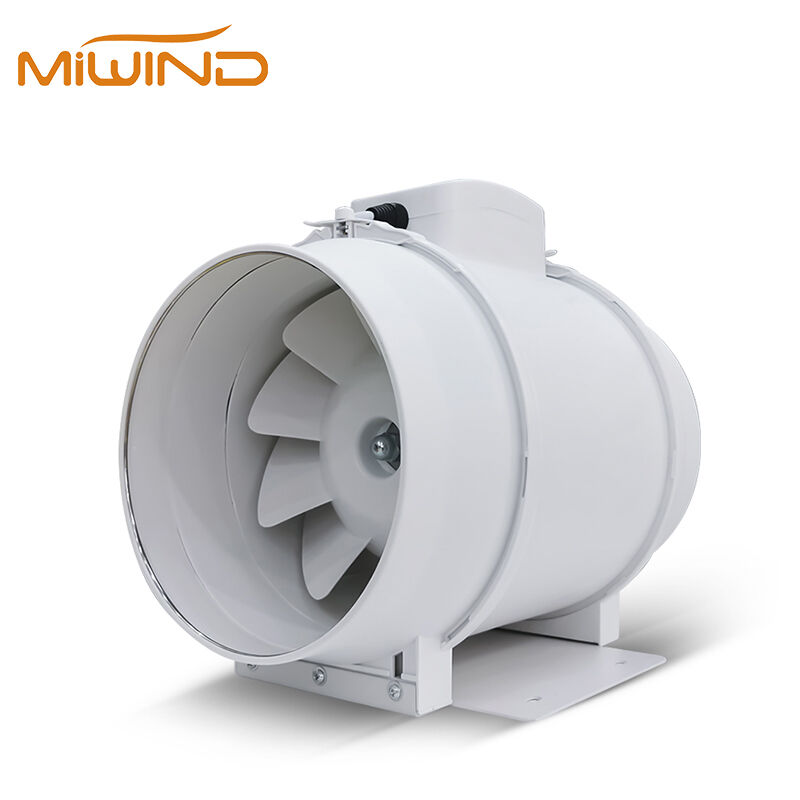
Understanding how a duct fan improves airflow efficiency requires looking at the mechanics of ventilation systems, the common problems that reduce performance, and the specific ways an inline fan addresses those challenges. This article breaks down the mechanism, the key performance factors, and the practical scenarios where a duct fan delivers the most measurable impact on system efficiency.
The Core Mechanism of a Duct Fan in a Ventilation System
How a Duct Fan Generates and Sustains Airflow
A duct fan operates by using a motorized impeller housed within a cylindrical or rectangular casing that fits directly into the duct run. When the motor spins the impeller, it creates a pressure differential — drawing air in from one side and expelling it from the other. This continuous mechanical action sustains airflow even when the natural pressure gradient within the duct is insufficient to move air at the required rate.
Unlike passive ventilation, which depends entirely on temperature differences or wind pressure, a duct fan provides active, controllable airflow. This means the system can maintain target air change rates regardless of external weather conditions or seasonal variations. The result is a more predictable and stable ventilation performance throughout the year.
The placement of the duct fan within the duct run is critical. Positioning it at the midpoint of a long duct run, or near a zone with high resistance, allows it to overcome static pressure losses most effectively. Engineers typically calculate the total equivalent length of the duct system and match the fan's static pressure rating accordingly to ensure the fan can sustain the required airflow volume.
Static Pressure and Airflow Volume: The Two Pillars of Efficiency
Airflow efficiency in a ventilation system is governed by two interdependent parameters: static pressure and airflow volume, typically measured in cubic feet per minute (CFM) or cubic meters per hour (m³/h). A duct fan must be selected and sized to balance both. A fan with high airflow volume but insufficient static pressure will underperform in systems with long duct runs, multiple bends, or restrictive grilles.
The fan curve — a graphical representation of how a duct fan performs across different static pressure conditions — is the primary tool for matching a fan to a specific system. When the system's resistance curve intersects the fan curve at the desired operating point, the duct fan delivers its rated efficiency. Selecting a fan whose operating point falls near the peak of its efficiency curve minimizes energy consumption while maximizing airflow output.
In practice, this means that a properly selected duct fan does not simply add more air movement — it adds the right amount of air movement at the right pressure, which is the true definition of airflow efficiency. Oversized fans waste energy and create noise; undersized fans fail to meet ventilation targets. Precision in selection is what separates an efficient system from an inefficient one.
Common Airflow Problems That a Duct Fan Resolves
Pressure Drop in Long or Complex Duct Runs
One of the most frequent causes of poor ventilation performance is pressure drop across long duct runs. As air travels through ductwork, friction between the air and the duct walls, combined with turbulence at bends, junctions, and transitions, progressively reduces the air's velocity and pressure. By the time air reaches the terminal diffusers at the far end of the system, the volume and velocity may be significantly below design specifications.
Installing a duct fan at a strategic point in the run restores the pressure and velocity that friction has eroded. This is particularly valuable in buildings where the air handling unit (AHU) is located far from certain zones, or where duct routing must navigate around structural obstacles. The duct fan effectively acts as a booster, extending the reach of the central system without requiring a complete redesign of the ductwork.
In retrofit projects, where adding new ductwork or upgrading the central AHU is cost-prohibitive, a duct fan offers a targeted, cost-effective solution. It addresses the specific weak point in the system rather than requiring a wholesale infrastructure change, making it a preferred tool for building engineers managing existing ventilation networks.
Uneven Air Distribution Across Multiple Zones
Multi-zone ventilation systems frequently suffer from imbalanced airflow, where some rooms or areas receive more air than others. This imbalance is often caused by differences in duct length, varying resistance levels across branches, or changes in occupancy patterns that alter the demand profile of the system. The result is that some zones are over-ventilated while others are under-ventilated, leading to comfort complaints and energy waste.
A duct fan installed in an under-served branch can independently boost airflow to that zone without affecting the rest of the system. This targeted approach to balancing is more precise than adjusting dampers alone, which can create backpressure elsewhere in the network. When combined with variable speed control, a duct fan can modulate its output in real time to match the actual demand of the zone it serves.
Variable speed duct fans, in particular, have become a standard tool in demand-controlled ventilation (DCV) systems. By responding to CO2 sensors or occupancy signals, the duct fan adjusts its speed to deliver exactly the airflow needed at any given moment. This dynamic response eliminates both under-ventilation and over-ventilation, which are the two primary sources of inefficiency in multi-zone systems.
Energy Efficiency Gains from Proper Duct Fan Integration
Reducing the Load on Central Air Handling Units
A central air handling unit must generate enough pressure to overcome the resistance of the entire duct network, including the most remote and most resistive branch. This means the AHU is often sized for worst-case conditions, which results in it operating at higher energy consumption than necessary for most of the system most of the time. Distributing the pressure generation task across multiple duct fans allows the central AHU to operate at a lower, more efficient duty point.
This distributed approach to pressure management is a well-established strategy in large commercial and industrial ventilation design. By placing duct fans at key points in the network, engineers can reduce the total static pressure requirement of the central unit, which directly translates into lower motor power consumption and reduced operating costs. The energy savings from this approach can be substantial over the lifetime of the system.
Additionally, reducing the operating pressure of the central AHU extends its service life and reduces maintenance frequency. Lower mechanical stress on bearings, belts, and motor windings means fewer breakdowns and lower lifecycle costs. The duct fan, in this context, is not just an airflow tool — it is a system optimization component that improves the overall economics of the ventilation infrastructure.
Variable Speed Control and Demand-Responsive Operation
Modern duct fans are frequently equipped with electronically commutated (EC) motors or variable frequency drives (VFDs) that allow precise speed control. This capability is central to achieving energy efficiency in ventilation systems that experience variable loads. Rather than running at full speed continuously, the duct fan adjusts its output to match actual conditions, consuming only the energy required at any given moment.
The relationship between fan speed and power consumption follows the affinity laws: reducing fan speed by 20% reduces power consumption by approximately 49%. This means that even modest reductions in operating speed, when sustained over long periods, produce significant energy savings. In systems where the duct fan operates for thousands of hours per year, the cumulative effect on energy bills is considerable.
Integration with building management systems (BMS) allows the duct fan to participate in broader energy management strategies. Scheduled operation, setpoint-based control, and fault detection are all possible when the duct fan is connected to the BMS. This level of integration transforms the duct fan from a standalone component into an active participant in the building's overall energy performance strategy.
Installation Considerations That Affect Duct Fan Performance
Duct Sizing and Velocity Matching
The efficiency of a duct fan is directly affected by the duct size it is installed in. If the duct is undersized relative to the fan's airflow capacity, air velocity will be excessively high, generating noise and increasing turbulence losses. If the duct is oversized, the fan may not develop sufficient velocity to maintain the required airflow at the terminal points. Matching the duct fan's diameter and airflow rating to the existing duct dimensions is a prerequisite for efficient operation.
Transition pieces and reducers, when necessary, should be gradual rather than abrupt to minimize turbulence at the fan inlet and outlet. Sharp transitions create localized pressure losses that reduce the effective output of the duct fan and increase noise levels. Following manufacturer guidelines for inlet and outlet clearances ensures the fan operates within its rated performance envelope.
Duct sealing is equally important. Air leakage in the duct run upstream or downstream of the duct fan reduces the volume of conditioned air that actually reaches the intended space. Even a well-selected and properly installed duct fan cannot compensate for significant duct leakage. Ensuring duct integrity before and after fan installation is a fundamental step in achieving the expected efficiency improvements.
Vibration Isolation and Acoustic Performance
A duct fan introduces mechanical vibration into the duct system, which can transmit as noise to occupied spaces if not properly managed. Flexible duct connectors on both the inlet and outlet sides of the fan isolate vibration from the rigid ductwork, preventing structure-borne noise transmission. This is particularly important in noise-sensitive environments such as offices, healthcare facilities, and educational buildings.
The fan's operating speed also affects acoustic performance. Running a duct fan at lower speeds not only saves energy but also reduces noise output, since aerodynamic noise increases sharply with fan speed. Selecting a fan with a slightly larger diameter and running it at a lower speed to achieve the same airflow volume is a common strategy for balancing performance and acoustic comfort.
Regular maintenance, including cleaning of the impeller and inspection of motor bearings, preserves both the acoustic and energy performance of the duct fan over time. Dust accumulation on the impeller blades increases imbalance and noise while reducing airflow efficiency. A maintenance schedule aligned with the operating environment — more frequent in dusty or high-humidity conditions — ensures the duct fan continues to deliver its rated performance throughout its service life.
FAQ
What is the difference between a duct fan and a standard exhaust fan?
A duct fan is designed to be installed inline within a duct run, moving air through the duct system from one point to another. A standard exhaust fan is typically mounted at the terminal point of a duct — at a wall, ceiling, or roof — and exhausts air directly to the outside. The duct fan is a booster or distribution component, while the exhaust fan is a terminal device. Both can be used together in a complete ventilation system.
How do I know if my ventilation system needs a duct fan?
Common indicators include rooms that consistently receive less airflow than others, noticeable stuffiness or poor air quality in specific zones, or a central AHU that struggles to maintain target airflow rates across the entire system. If balancing dampers have been adjusted to their limits without resolving the imbalance, or if duct runs exceed the pressure capacity of the central unit, a duct fan is likely the appropriate solution.
Can a duct fan be used in both supply and exhaust duct systems?
Yes, a duct fan can be installed in both supply and exhaust duct runs. In supply systems, it boosts conditioned air delivery to under-served zones. In exhaust systems, it assists in removing stale air, moisture, or contaminants from spaces with high extraction demands. The fan must be selected with the correct airflow direction and pressure rating for the specific application, and the motor and housing materials should be appropriate for the air quality conditions in the duct.
Does installing a duct fan increase energy consumption?
A duct fan does add a motor load to the system, but when properly selected and integrated, it typically reduces overall system energy consumption. By allowing the central AHU to operate at a lower duty point and by enabling demand-responsive speed control, the duct fan can deliver net energy savings compared to running an oversized central unit at high pressure continuously. The key is correct sizing and the use of variable speed control to match output to actual demand.