 EN
EN

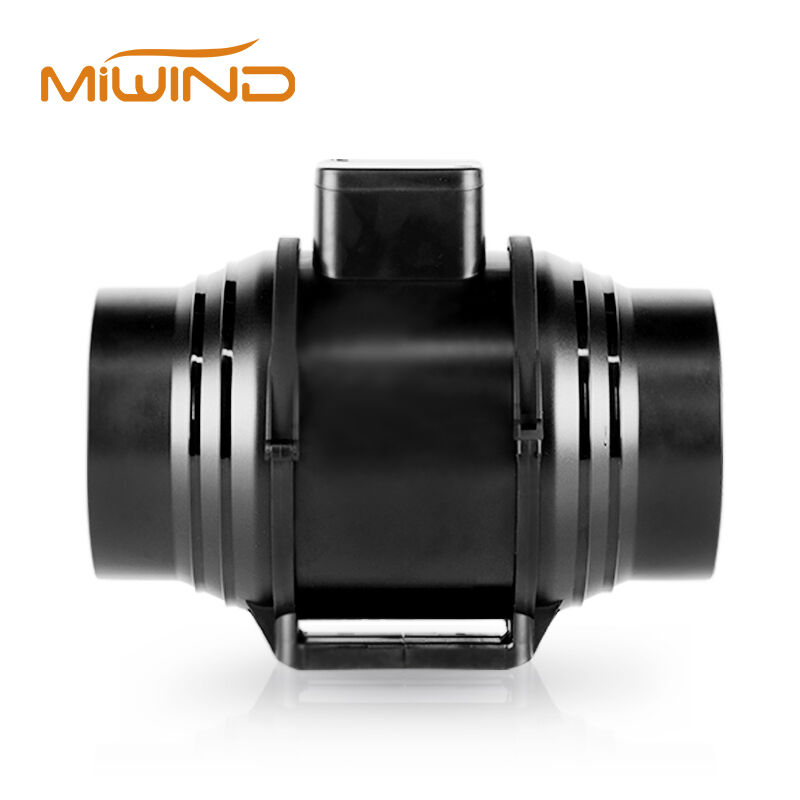
In any ventilation system where air must travel through multiple bends, branches, and extended runs of ductwork, maintaining consistent airflow is one of the most demanding engineering challenges. A well-selected duct fan is the mechanical backbone that keeps air moving reliably from source to destination, regardless of how complex the ducting layout becomes. Without adequate inline air-moving support, pressure losses accumulate at every turn and junction, leading to uneven distribution, stagnant zones, and compromised indoor air quality across the entire system.
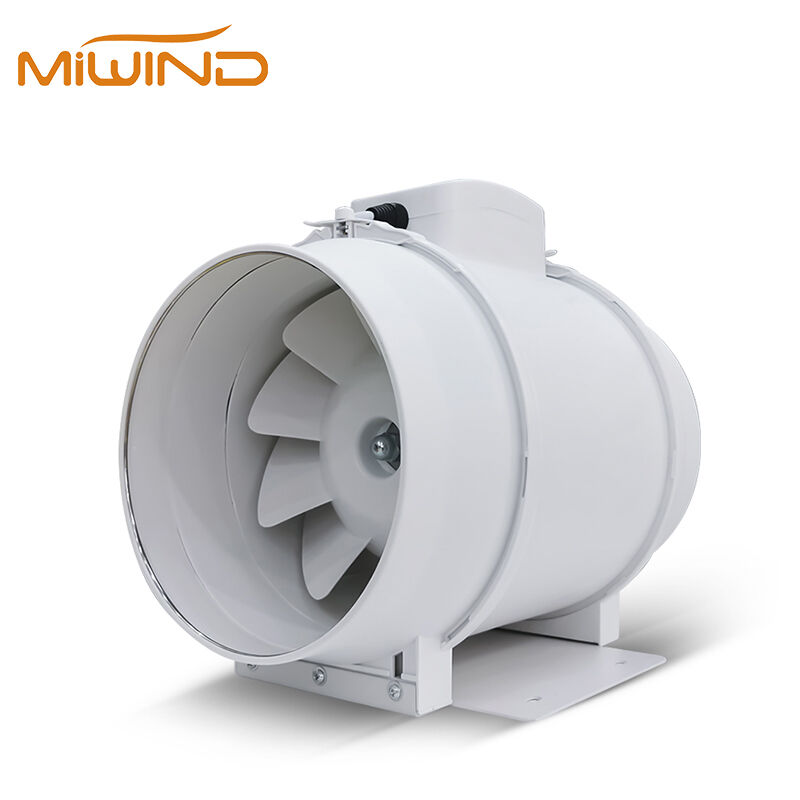
Understanding how a duct fan supports consistent airflow in complex ducting requires looking beyond simple fan selection. It involves understanding static pressure dynamics, strategic placement logic, motor performance under variable load, and how the fan interacts with the full geometry of the duct network. This article breaks down the mechanisms, placement principles, and operational factors that allow a duct fan to deliver stable, uniform airflow even in the most demanding ducting configurations.
The Physics Behind Airflow Resistance in Complex Duct Networks
How Duct Geometry Creates Pressure Loss
Every element of a duct system introduces resistance to airflow. Straight runs create friction losses proportional to their length and the roughness of the duct wall surface. Bends, elbows, and transitions create additional turbulence-based losses that compound quickly in systems with multiple direction changes. The longer and more convoluted the duct path, the greater the total static pressure that a duct fan must overcome to sustain adequate airflow velocity at the terminal outlets.
In branched duct networks, the challenge intensifies. Air naturally follows the path of least resistance, which means branches closer to the fan receive disproportionately more airflow while distant or high-resistance branches receive far less. Without a duct fan positioned to compensate for these imbalances, the system delivers inconsistent performance across different zones, making it difficult to meet ventilation targets uniformly.
The relationship between airflow volume and static pressure is captured in a fan's performance curve. A duct fan operating in a complex system must be selected so that its operating point — where the system resistance curve intersects the fan curve — falls within the fan's efficient performance range. Mismatched selection leads to either insufficient airflow or excessive energy consumption, both of which undermine system reliability.
Static Pressure and Its Role in Fan Selection
Static pressure is the measure of resistance that a duct fan must overcome to push or pull air through the system. In simple, short duct runs, static pressure requirements are modest and almost any adequately sized duct fan will perform acceptably. In complex systems with long runs, multiple elbows, dampers, filters, and diffusers, static pressure requirements can be several times higher, demanding a duct fan with a steeper pressure-volume curve and a more powerful motor.
Calculating total system static pressure before selecting a duct fan is not optional in complex installations — it is the foundation of the entire design. Engineers sum the friction losses from straight duct sections, the dynamic losses from fittings, and the resistance from any in-line components such as heat exchangers or filters. The resulting total static pressure figure defines the minimum pressure capability that the duct fan must deliver at the required airflow volume.
A duct fan that is undersized for the static pressure demand will run at maximum speed while delivering below-target airflow, causing motor overheating and premature failure. Conversely, an oversized duct fan operating far left on its performance curve may generate excessive noise and turbulence. Precise static pressure matching is what allows a duct fan to sustain consistent airflow over the long term without operational stress.
Strategic Placement of Duct Fans in Complex Systems
Inline Positioning for Maximum Pressure Recovery
The placement of a duct fan within the duct network has a direct and significant impact on how effectively it supports consistent airflow. Inline placement — where the duct fan is installed directly within the duct run rather than at the inlet or outlet — allows the fan to act as a booster, recovering pressure that has been lost over the upstream duct length and re-energizing the airflow for the downstream sections. This approach is particularly effective in long horizontal runs where friction losses are the dominant resistance factor.
When a duct fan is placed inline at a calculated midpoint or at the beginning of a high-resistance branch, it can equalize pressure distribution across the network. This prevents the common problem of near-fan zones receiving excessive airflow while far-field zones receive inadequate supply. Proper inline placement transforms a duct fan from a simple air mover into an active pressure management device within the system architecture.
In multi-story or multi-zone buildings, inline duct fans are often deployed in series along the main duct trunk to maintain velocity pressure over extended vertical or horizontal distances. Each duct fan in the series handles a defined segment of the total pressure requirement, distributing the mechanical load and preventing any single unit from being pushed beyond its efficient operating range.
Branch Boosting and Zone-Specific Airflow Control
Complex duct systems frequently serve multiple zones with different airflow demands. A single central duct fan at the air handling unit may not be capable of delivering adequate pressure to every branch simultaneously, especially when branch lengths vary significantly or when some branches include additional resistance elements such as filters or coils. Installing a dedicated duct fan at the entry point of high-resistance branches is a proven strategy for achieving zone-specific airflow control.
Branch-mounted duct fans allow each zone to be tuned independently. By adjusting the speed of the duct fan serving a particular branch — either manually or through a variable speed controller — the system operator can balance airflow across all zones without resorting to restrictive dampers that waste energy by throttling flow. This approach is especially valuable in industrial facilities, commercial kitchens, laboratory environments, and grow rooms where different areas have distinct and sometimes variable ventilation requirements.
The flexibility that a branch-mounted duct fan provides also simplifies future system modifications. When a new zone is added or an existing zone's requirements change, the branch duct fan can be resized or its speed adjusted without redesigning the entire central system. This modularity makes the duct fan a strategically important component in scalable ventilation infrastructure.
Motor Performance and Speed Control in Variable Duct Conditions
How Motor Design Affects Airflow Stability
The motor inside a duct fan is the component most directly responsible for maintaining consistent airflow when duct conditions vary. In real-world installations, system resistance is rarely perfectly constant — dampers open and close, filters accumulate dust, and seasonal temperature changes affect air density. A duct fan with a motor that responds poorly to these variations will deliver fluctuating airflow rather than the stable, consistent performance that complex systems require.
EC (electronically commutated) motors have become the preferred choice for high-performance duct fan applications because they maintain a relatively flat power consumption curve across a wide range of operating conditions. Unlike traditional AC induction motors, EC motors can adjust their output in response to changes in system resistance, maintaining target airflow volume even as conditions shift. This self-compensating behavior is particularly valuable in complex duct systems where resistance conditions are inherently variable.
Thermal protection is another critical motor characteristic for duct fan reliability in complex systems. When a duct fan is installed deep within a duct network, access for maintenance is often limited. A motor with built-in thermal overload protection will shut down safely if operating temperatures exceed safe limits — for example, if a downstream blockage causes the fan to work against excessive static pressure — preventing permanent damage and reducing the risk of fire in the duct system.
Variable Speed Control and Its Impact on Consistent Delivery
Variable speed control is one of the most powerful tools available for maintaining consistent airflow from a duct fan in a complex system. By modulating fan speed in response to real-time pressure or flow measurements, a variable speed duct fan can compensate for changes in system resistance and maintain target airflow volumes without manual intervention. This capability is essential in systems where occupancy, process loads, or external conditions cause demand to fluctuate throughout the day.
Speed controllers for duct fans range from simple manual potentiometers to sophisticated building automation system (BAS) integrations with pressure transducers and flow sensors. In complex commercial or industrial duct systems, BAS-integrated duct fan control allows the entire ventilation network to be managed as a coordinated system rather than a collection of independent components. The duct fan becomes a responsive element within a larger control loop, continuously adjusting to maintain the airflow conditions that the system design specifies.
Energy efficiency is a significant secondary benefit of variable speed duct fan operation. Fan power consumption follows the cube law — reducing fan speed by 20% reduces power consumption by approximately 49%. In complex systems where full airflow is only required during peak demand periods, variable speed duct fans can deliver substantial energy savings while still guaranteeing consistent airflow whenever it is needed.
Installation Practices That Protect Airflow Consistency
Duct Connection Quality and Turbulence Reduction
Even a correctly selected and properly positioned duct fan will underperform if the duct connections at its inlet and outlet are poorly executed. Turbulent airflow entering the fan impeller reduces aerodynamic efficiency and increases noise. The standard recommendation is to provide a straight duct section of at least five duct diameters upstream of the duct fan inlet and three diameters downstream of the outlet. This allows the airflow to stabilize before entering the fan and to recover pressure uniformly after leaving it.
Flexible duct connectors between the rigid duct and the duct fan housing serve two important purposes. They isolate vibration from the fan motor, preventing it from transmitting through the duct structure and generating noise in occupied spaces. They also accommodate minor misalignments between the fan and the duct centerline, reducing mechanical stress on the fan housing and the duct joints. Both factors contribute to the long-term reliability of the duct fan installation.
Sealing all duct joints in the vicinity of the duct fan is equally important. Air leakage at joints near the fan creates pressure imbalances that distort the fan's operating point and reduce the effective airflow delivered to the intended zones. In complex systems where pressure differentials are already carefully balanced, even small leaks can cause measurable degradation in airflow consistency across the network.
Maintenance Schedules That Preserve Long-Term Performance
A duct fan installed in a complex system is only as reliable as its maintenance regime. Dust and particulate accumulation on fan blades is one of the most common causes of gradual airflow degradation. As deposits build up on the impeller, the blade profile changes, reducing aerodynamic efficiency and increasing the static pressure required to move the same volume of air. Regular inspection and cleaning of the duct fan impeller is essential for preserving the airflow consistency that the system was designed to deliver.
Bearing condition is another maintenance priority for duct fans in complex systems. Worn bearings increase mechanical resistance, reduce motor efficiency, and eventually lead to impeller imbalance that generates vibration and noise. Scheduled bearing inspection — or replacement at manufacturer-recommended intervals — prevents the gradual performance decline that undetected bearing wear causes. In systems where the duct fan is installed in a difficult-to-access location, predictive maintenance approaches using vibration monitoring sensors can provide early warning of bearing degradation without requiring physical access to the unit.
Filter maintenance upstream of the duct fan is also directly linked to airflow consistency. As filters load with particulate, system static pressure increases, pushing the duct fan's operating point toward lower airflow on its performance curve. Establishing a filter replacement schedule based on measured pressure drop rather than fixed time intervals ensures that the duct fan always operates within its intended performance range, maintaining consistent airflow delivery regardless of seasonal or occupancy-driven variations in particulate loading.
FAQ
What makes a duct fan different from a standard axial fan in a complex duct system?
A duct fan is specifically designed to operate within an enclosed duct, generating the static pressure needed to overcome duct resistance. Standard axial fans are optimized for free-air delivery with minimal back pressure and lose efficiency rapidly when installed in ducted configurations. A duct fan, particularly a centrifugal or mixed-flow inline type, maintains its performance across a much wider range of static pressure conditions, making it the appropriate choice for complex duct networks with significant resistance.
How do I know if I need more than one duct fan in my system?
If your duct system has branches that are significantly longer or more restrictive than others, or if the total duct length from the air handling unit to the farthest outlet exceeds the pressure capability of a single central fan, additional duct fans are likely needed. The clearest indicator is uneven airflow across outlets — zones close to the central fan receiving too much air while distant zones receive too little. A system pressure analysis will identify where supplementary duct fans should be placed to restore balance.
Can a duct fan be used to correct airflow imbalances in an existing system?
Yes, adding a duct fan to an existing system is one of the most cost-effective ways to correct chronic airflow imbalances without replacing the entire duct network. By installing a duct fan at the entry point of an underperforming branch, you can boost pressure in that branch independently of the rest of the system. Variable speed control allows fine-tuning of the boost level to achieve the target airflow balance without over-pressurizing adjacent branches.
What is the typical lifespan of a duct fan in a continuously operating commercial system?
A well-selected and properly maintained duct fan in a commercial application typically delivers between 30,000 and 50,000 hours of reliable operation, depending on motor type, operating temperature, and maintenance frequency. EC motor-based duct fans generally achieve the upper end of this range due to their lower operating temperatures and reduced mechanical stress. Regular cleaning, bearing inspection, and filter management are the primary factors that determine whether a duct fan reaches its rated service life.
Table of Contents
- The Physics Behind Airflow Resistance in Complex Duct Networks
- Strategic Placement of Duct Fans in Complex Systems
- Motor Performance and Speed Control in Variable Duct Conditions
- Installation Practices That Protect Airflow Consistency
-
FAQ
- What makes a duct fan different from a standard axial fan in a complex duct system?
- How do I know if I need more than one duct fan in my system?
- Can a duct fan be used to correct airflow imbalances in an existing system?
- What is the typical lifespan of a duct fan in a continuously operating commercial system?