 EN
EN

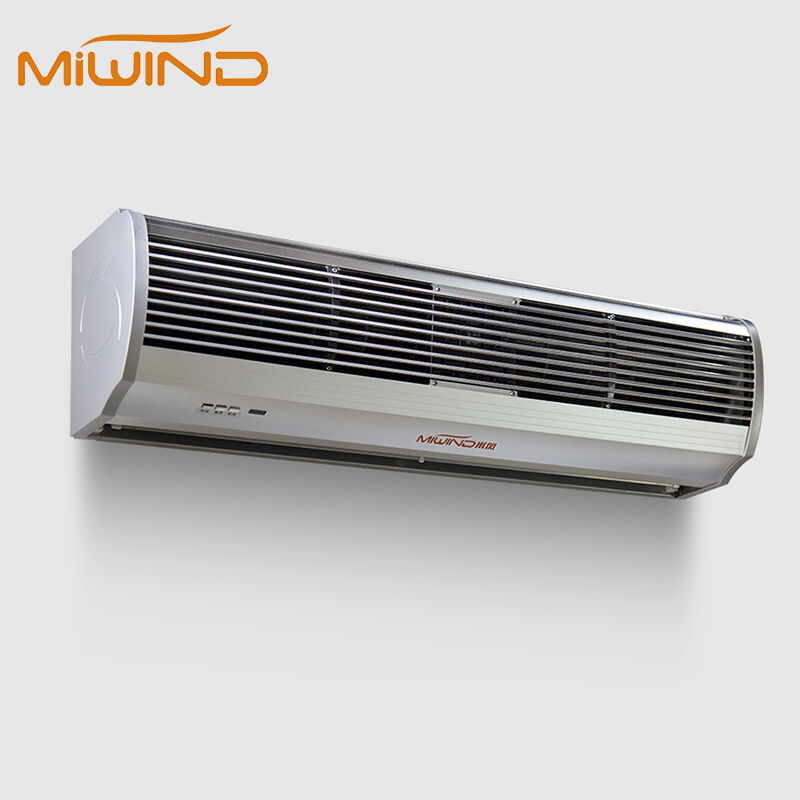
The relationship between door height and air curtain performance represents one of the most critical design considerations in commercial and industrial HVAC applications. As building designs evolve toward higher ceilings and larger openings, understanding how air curtain effectiveness varies with mounting height becomes essential for maintaining energy efficiency, climate control, and occupant comfort. The physics of air movement fundamentally changes as the vertical distance increases, creating unique challenges that require careful analysis and strategic equipment selection.
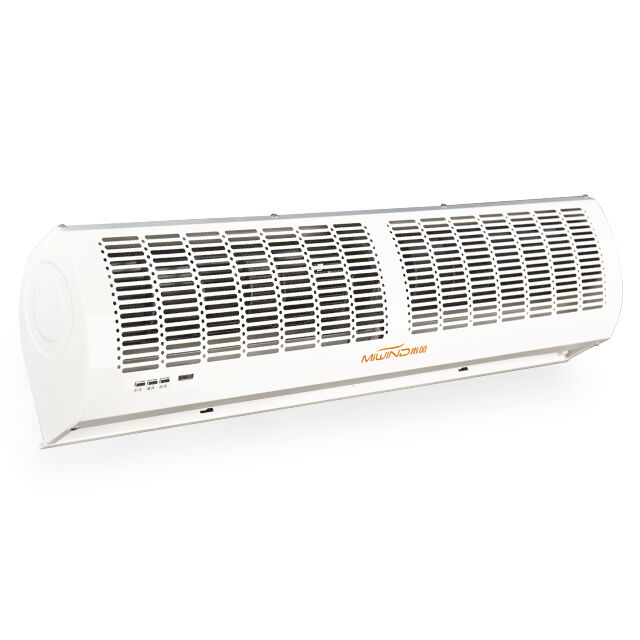
Door height directly influences air curtain jet velocity, coverage patterns, and thermal separation capabilities through complex aerodynamic interactions. Higher installations face increased air mixing with ambient conditions, reduced jet momentum at floor level, and greater susceptibility to cross-drafts and pressure differentials. These factors compound to create performance variations that can significantly impact energy consumption, temperature control, and the overall effectiveness of building envelope protection systems.
Aerodynamic Principles Governing Height-Based Performance
Jet Velocity Decay and Distance Relationships
Air curtain jet velocity follows predictable decay patterns as it travels from the discharge outlet toward the floor level. The initial velocity at the air curtain outlet experiences exponential reduction due to friction with ambient air, turbulent mixing, and momentum transfer. For standard commercial applications, jet velocity typically decreases by approximately 15-20% for every meter of vertical travel under ideal conditions.
This velocity reduction becomes more pronounced at greater heights due to increased exposure time to ambient air conditions. At door heights exceeding 4 meters, the cumulative effect of velocity decay can result in floor-level air speeds that are 40-50% lower than the initial discharge velocity. This reduction directly impacts the air curtain's ability to maintain an effective barrier against air infiltration and temperature transfer.
The relationship between mounting height and jet integrity follows non-linear patterns influenced by ambient temperature differentials, humidity levels, and external pressure conditions. Engineers must account for these variables when calculating the required discharge velocity and airflow rates to maintain effective performance at the building entrance level.
Entrainment Effects and Air Mixing Dynamics
Higher door installations increase the air curtain jet's exposure to entrainment effects, where surrounding air masses become drawn into the high-velocity stream. This phenomenon causes the air curtain jet to widen and lose coherence as it travels downward, reducing its effectiveness as a thermal barrier. The entrainment rate increases proportionally with the square root of the distance traveled, making height a critical factor in performance calculations.
Ambient air mixing becomes particularly problematic when temperature differentials exist between indoor and outdoor environments. Cold outdoor air can cause the air curtain jet to become denser and deviate from its intended path, while heated indoor air creates buoyancy effects that can disrupt jet stability. These mixing effects compound with height, requiring higher initial velocities and airflow rates to maintain effective separation.
The width of the air curtain jet typically increases by 10-15% for every meter of vertical travel due to entrainment and turbulent mixing. This expansion requires careful consideration of nozzle design, discharge angles, and airflow distribution patterns to ensure adequate coverage across the entire door opening width.
Performance Metrics Across Variable Door Heights
Thermal Separation Efficiency Analysis
Thermal separation efficiency represents the primary performance metric for evaluating air curtain effectiveness across different door heights. This measurement quantifies the system's ability to prevent temperature transfer between conditioned and unconditioned spaces. Research indicates that air curtain thermal efficiency decreases exponentially with mounting height, dropping from 85-90% effectiveness at 2.5-meter installations to 60-70% effectiveness at heights exceeding 6 meters.
The temperature differential maintenance capability varies significantly based on door height and ambient conditions. Lower installations typically maintain temperature differentials within 2-3 degrees Celsius of design specifications, while higher installations may experience 5-8 degree variations during peak load conditions. This performance degradation directly impacts HVAC energy consumption and occupant comfort levels.
Measuring thermal separation requires consideration of both steady-state and dynamic conditions. Door openings create pressure imbalances and air movement patterns that can overwhelm air curtain systems, particularly at greater heights where jet momentum may be insufficient to resist these forces. Engineers must evaluate performance under various operating scenarios to ensure adequate protection across all anticipated conditions.
Airflow Distribution and Coverage Patterns
Door height significantly influences airflow distribution patterns and coverage uniformity across the opening width. Lower installations typically achieve more consistent air velocity profiles due to reduced jet expansion and mixing effects. The coefficient of variation in air velocity across the door width generally remains below 15% for installations under 3 meters but can exceed 25% for heights above 5 meters.
Coverage pattern analysis reveals that higher installations require wider air curtain units or multiple discharge points to maintain adequate protection across the entire opening. The effective coverage width decreases with height as the jet expands and loses coherence, requiring oversizing of equipment or implementation of supplementary air curtain systems.
Pressure recovery at floor level becomes increasingly challenging with greater heights. The air curtain must generate sufficient downward momentum to create positive pressure at the building entrance while overcoming the natural tendency for air to spread horizontally as it approaches obstacles. This requirement typically necessitates 20-30% higher airflow rates for installations exceeding standard commercial door heights.
Design Optimization Strategies for Variable Heights
Equipment Sizing and Selection Criteria
Proper air curtain sizing for variable door heights requires comprehensive analysis of airflow requirements, discharge velocity specifications, and power consumption considerations. The sizing methodology must account for the increased airflow rates needed to overcome height-related performance losses while maintaining energy efficiency objectives. Standard sizing charts often underestimate requirements for installations exceeding 4-meter heights.
Motor sizing becomes critical for higher installations due to the increased static pressure requirements needed to generate adequate discharge velocities. The relationship between motor power and door height follows an exponential curve, with installations above 6 meters typically requiring 40-60% higher motor capacity compared to standard commercial applications. This power increase must be balanced against energy consumption goals and operational cost considerations.
Fan selection criteria must prioritize high static pressure capabilities and efficient operation across variable load conditions. Centrifugal fans typically provide better performance characteristics for high-height applications compared to axial designs, offering superior pressure recovery and more stable operation under varying ambient conditions. The fan curve characteristics become increasingly important as installation height increases.
Installation Configuration and Mounting Strategies
Mounting configuration significantly impacts air curtain performance across different door heights. Single-unit installations become less effective as height increases, often requiring multiple discharge points or specialized high-velocity designs. The optimal mounting strategy depends on door width, height, traffic patterns, and ambient environmental conditions.
Discharge angle optimization becomes more critical for higher installations. While standard air curtain units typically discharge air vertically downward, higher installations may benefit from slight forward angles (5-15 degrees) to compensate for jet deviation and ensure adequate floor-level coverage. This angle adjustment must be balanced against the risk of creating uncomfortable air movement patterns in occupied spaces.
Multiple air curtain configurations may be necessary for very high door openings, with units installed at intermediate heights to provide stepped air coverage. This approach maintains jet integrity by reducing the vertical distance each unit must cover while ensuring continuous air barrier protection. The coordination between multiple units requires careful control system integration and airflow balancing.
Operational Considerations and Performance Monitoring
Control System Adaptations for Height Variables
Control system complexity increases with door height due to the need for more sophisticated monitoring and adjustment capabilities. Higher installations require more sensitive temperature and pressure sensors to detect performance variations and automatically adjust operating parameters. The control system must compensate for height-related performance losses through dynamic airflow and velocity adjustments.
Variable frequency drives become essential for optimizing air curtain operation across different door heights and ambient conditions. These systems allow real-time adjustment of fan speed and airflow rates based on measured performance parameters, maintaining optimal efficiency while ensuring adequate protection. The control algorithms must account for the non-linear relationship between height and performance requirements.
Integration with building management systems enables comprehensive monitoring of air curtain performance relative to overall HVAC system operation. This integration allows for coordinated control strategies that optimize energy consumption while maintaining indoor environmental quality standards. The data collected from height-variable installations provides valuable insights for future design optimization and operational improvements.
Maintenance and Performance Validation
Maintenance requirements increase with door height due to reduced accessibility and more demanding operating conditions. Higher installations typically experience greater accumulation of dust and debris due to increased air entrainment and longer exposure to ambient conditions. Regular inspection schedules must account for these factors while ensuring safe access for maintenance personnel.
Performance validation protocols must include height-specific testing procedures to verify thermal separation efficiency and airflow distribution patterns. Standard commissioning procedures may be insufficient for higher installations, requiring specialized measurement equipment and extended testing periods to capture performance variations under different operating conditions.
Long-term performance monitoring becomes more critical for height-variable installations due to the potential for gradual performance degradation. Regular measurement of key performance indicators, including jet velocity profiles, temperature separation efficiency, and energy consumption patterns, helps identify optimization opportunities and maintenance needs before performance drops below acceptable levels.
FAQ
What is the maximum effective height for standard commercial air curtain installations?
Standard commercial air curtain units typically maintain effective performance up to 4-5 meters in height. Beyond this range, specialized high-velocity units or multiple-discharge configurations are generally required to achieve adequate thermal separation and airflow coverage. The exact maximum height depends on specific ambient conditions, temperature differentials, and performance requirements.
How much additional airflow is required for each meter of increased door height?
Airflow requirements typically increase by 20-25% for each additional meter of door height above standard commercial installations (2.5-3 meters). This increase accounts for velocity decay, entrainment effects, and the need to maintain adequate floor-level air speeds. The exact multiplier varies based on ambient conditions and specific performance objectives.
Can multiple air curtain units be installed at different heights on the same door opening?
Yes, multiple air curtain units can be installed at different heights to create a stepped air barrier system. This configuration is particularly effective for very high openings, allowing each unit to cover a shorter vertical distance while maintaining overall protection. Proper control system coordination is essential to ensure balanced operation and prevent air flow conflicts between units.
How does building pressure differential affect air curtain performance at greater heights?
Building pressure differentials have an amplified impact on air curtain performance at greater heights due to reduced jet momentum at floor level. Higher installations are more susceptible to pressure-induced air movement that can overwhelm the air curtain barrier. Design calculations must account for expected pressure differentials and may require increased airflow rates or supplementary pressure management systems.
Table of Contents
- Aerodynamic Principles Governing Height-Based Performance
- Performance Metrics Across Variable Door Heights
- Design Optimization Strategies for Variable Heights
- Operational Considerations and Performance Monitoring
-
FAQ
- What is the maximum effective height for standard commercial air curtain installations?
- How much additional airflow is required for each meter of increased door height?
- Can multiple air curtain units be installed at different heights on the same door opening?
- How does building pressure differential affect air curtain performance at greater heights?